 FAKE RONJAN!!
Concussion: A Useless Movie Review
Concussion isn't a movie about concussions.
Medically, it's about how sub-concussive hits, the everyday plays in football, cause brain damage in the form of CTE. Structurally, it's about the life of Dr. Bennet Omalu, who discovered this link. And societally, it's about America's collective apathy towards this, despite the evidence.
Given all this, perhaps the movie really is about a concussion: the concussion-like daze that our culture is in, unsure of how to react to the revelations that America's national passion is killing its heroes.
My earliest memories of football come from January of 1990, when my then-hometown Colorado Buffaloes made it to the Orange Bowl and the Denver Broncos followed that up by making - and losing - another Super Bowl. I was hooked.
For the next 23 years, my Sundays would be consumed by the NFL, with small breaks for orchestra practice in CJS and CSYO. Even though we had moved to Cincinnati, I continued to root for the Denver Broncos, and this turned out to be a good decision. The Bengals were the worst team of the decade that I lived there, while the Broncos exorcised their playoff demons and won two Super Bowls, the first being one of my favorite games I've ever watched in any sport.
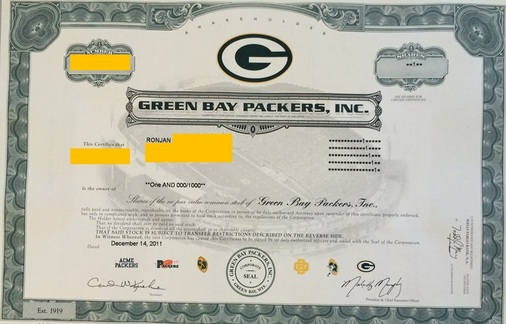
Football was the perfect combination of strategy and execution, of violence and beauty, of brawn and brain, and I went in deep. I played hours of NFL video games. I listened to - and remixed - NFL music. I ran and participated in several fantasy leagues. I created power rankings formulas. I became a single-share owner. Hell, I started this site because I wanted an outlet for my NFL passion.
And then I quit. I quit watching the NFL, I quit playing fantasy football, and I quit analyzing football statistics, because football kills its players.
Why am I prattling on about myself instead of talking about the movie? I wanted to show that everyone has a breaking point, a threshold beyond which they will tap out. If I can quit the NFL, being part of its target demographic, almost anyone can if pushed to the limit.
So is Concussion the film it needed to be? Kind of.
If we measure this film as a biopic about Dr. Bennet Omalu, then it is a wonderful success. Will Smith portrays him convincingly across a wide range of scenes - performing autopsies, discovering a groundbreaking link to brain damage, starting a family, and taking on a force larger than himself that desperately wanted to hide the truth. It's a great story, one that I would highly recommend.
That said, if we measure this film as a story about brain damage in the NFL, then it is a missed opportunity. Concussion the movie ends just as the the real world story escalated, with the suicide of Hall of Famer Junior Seau. We now have dozens of cases of confirmed CTE in deceased football players, there is a link to Alzheimer's and dementia, and players have begun to retire early, citing concerns about their long-term health.
By focusing the story on Dr. Omalu, Concussion frames the NFL as villains in a short-term cover-up. The truth is that the NFL is a mere mini-boss, and football itself is the big bad. This is why the Frontline special, League of Denial, is more impactful than Concussion - it tells the real story more effectively.
This year, nearly a dozen high school football players have died. Dr. Omalu wrote an op-ed asking parents not to let their children play. A key line in Concussion highlights that if 10% of mothers follow Dr. Omalu's advice, then the NFL as we know it is done.
Perhaps this is the power that this film has. Unlike Frontline, Concussion has the ability to reach a mainstream audience. It forced Will Smith to confront the role football played in his life. Through his fantastic performance, perhaps he will now force millions of football fans to do the same.
After all, everyone has a breaking point.
-rj