 FAKE RONJAN!!
When we are at our best, we serve as the voice of the people
Warning: this post contains millennial idealism. Some of this post is aspirational. Realists and cynics, proceed with caution!
Why? That's really the question, isn't it?
Why did I join Nielsen 14 years ago? Why do I slog through an hour+ commute from the northern Bronx to the southern tip of Manhattan every day? Why is Nielsen so important to me? And in those moments when I question the value of my life's work thus far, why does Nielsen even exist in today's society?
The answer to all of these questions is the same. When we are at our best, we serve as the voice of the people.
Nielsen turns 95 in August of this year, two months before an indisputable titan of media and pop culture, The Walt Disney Company, does. And for everything Disney has done to make the world magical over the past century, Nielsen has been just as impactful in making the world measurable.
And sure, Nielsen creations like market share and audience reach measurement underpin trillions of dollars of economic activity in the global economy and sustain a healthy-margin, multi-billion dollar business. But defining our value purely in economic terms undermines Nielsen's unique ability to empower those around the world by giving them a voice.
This can often be a power we overlook, especially in the US. While Americans have lived in the world's oldest surviving democracy and perhaps have grown complacent in participating in it, only 39% of the world's population live in a free society today. That means that well over half of the world depends on companies like Nielsen to give them a say in important matters in their lives, and since we operate in over 100 countries that cover over 90% of the global population, we play that role.
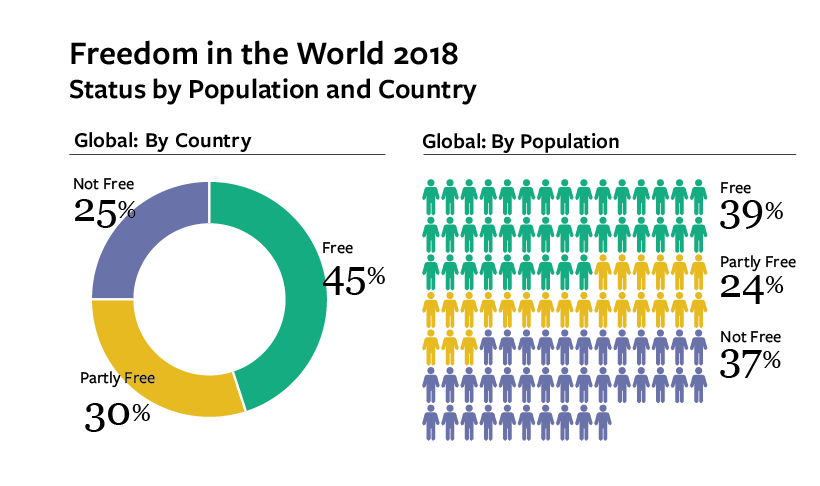
When we are at our best, we serve as the voice of the people. We are valuable because we listen. We listen to concerns, we read market shifts, and we convey the best intel. We do not gerrymander, we do not suppress votes, we bring no special agenda to the table, and we do not play favorites. We simply enable consumers to vote with their eyeballs and their wallets.
In return, nearly every large company in the world pays us for our knowledge, manufacturers, retailers, media companies, tech companies, and even government and non-government organizations. It's a breathtaking scope that has no real rival.
As the world continues to become more connected and technologically advanced, this role takes on even more importance. In a study with Google last year, we learned that consumers actually buy fewer brands and have fewer media touchpoints than they did five years ago. A plethora of options have led to fragmentation, where people buy niche products and watch niche content that directly relate or appeal to them in the format they care most about. This is a major shift in market trends, largely driven by younger consumers. We need to be their voice.
As our society continues on the long road to becoming more diverse and inclusive, this same logic extends to media and its impact on our culture. Nielsen's Chief Diversity Officer, Angela Talton, often speaks about putting D&I into the DNA of our company. Doing this means reconsidering how we think and talk about our role in the media ecosystem.
Media is not merely a vessel for delivering ads, and I would argue that we underplay the value of measurement if we only chase a currency role. Media is a reflection of who we are as a society, and that's why we should measure it.
We can learn, for example, that programs that feature minority talent and tell stories of the minority experience have proven they appeal to broad audiences. The implications this has on the future of Hollywood and the representation in media are tremendous.
Taking it to a personal level, I think about a program like Netflix's Master of None. Two episodes in particular, Parents (season 1, episode 2) and Religion (s2, e3), portrayed the most nuanced second-generation Indian-American experience I've ever seen. Both had me thinking deeply about my relationship with my parents, my dual-identity cultural upbringing, and this country, and yes, both made me cry. And in discussing these episodes with non-Asian friends of mine, I've found that these episodes actually helped them understand me better.
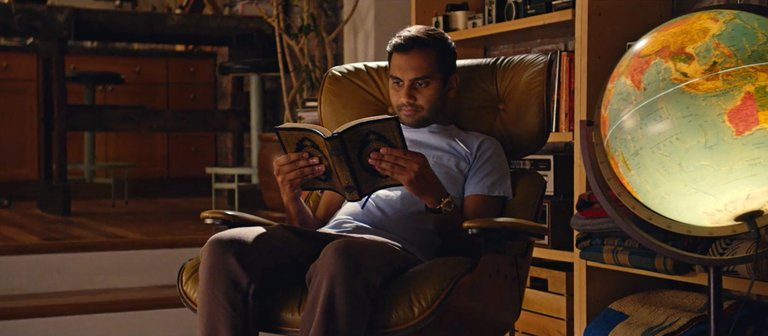
We have come a long way since Apu Nahasapeemapetilon defined the Indian-American experience, and now with Nielsen's Netflix measurement capability, we have yet another way to measure the impact of adding these types of stories to our collective culture. We need to be this voice.
When we are at our best, we serve as the voice of the people.
At Nielsen, we don't save lives in our day-to-day jobs. That's just a fact, and it's one that we've all told ourselves on the hard days when the work doesn't feel fulfilling or we need to release some stress.
But I'd argue that we can empower lives, systematically and at scale, locally and globally, through times of technological and demographic change. It's an awesome power, an incredible privilege, and an astounding responsibility.
And that's why I work at Nielsen.